


.avif)
Preparing Your Vermont Home for Fall Overwintering Pests: September Action Plan
- surremorinsights
- Dec 15, 2025
- 10 min read


Every September, Vermont homeowners witness the same unwelcome phenomenon: as the Green Mountain State's famous foliage begins to turn, thousands of insects and rodents begin their annual search for winter shelter. Your heated walls, protected attics, and cozy basements represent prime real estate for mice, cluster flies, stink bugs, and dozens of other overwintering pests.
Here's what makes Vermont different from most other states: with 78% forest coverage—4.6 million acres making us the third most forested state in the lower 48—your home is essentially an island surrounded by pest habitat. And when winter temperatures plunge to -20°F or colder, indoor shelter isn't just convenient for these creatures. It's essential for their survival.
The good news? You have a narrow window to stop them before they establish themselves in your walls. September is your critical action month, and what you do in the next few weeks will determine whether you spend the winter pest-free or battling invaders until spring.
At Purely Nature's Way, we've helped homeowners from Burlington to Brattleboro protect their homes using natural, eco-friendly methods that align with UVM Extension's recommendations. Here's your complete Vermont action plan for the season ahead.
Why Vermont Homes Face Unique Pest Pressure
Vermont's landscape creates exceptional challenges for homeowners that simply don't exist in most other states.
Our dense forest coverage means pests don't have to travel far to find your home. Western conifer seed bugs thrive in our abundant pine forests. Cluster flies breed in the earthworm-rich soil of our agricultural valleys. Asian lady beetles find endless habitat in our hardwood forests, which make up 71% of Vermont's tree cover.
Then there's our climate. Vermont's USDA hardiness zones range from 3b in the Northeast Kingdom to 5b in the Champlain Valley, meaning winter temperatures regularly reach -20°F to -35°F in northern regions. For overwintering pests, there's no surviving outdoors. Your home isn't just attractive—it's the only option.
Add to this Vermont's rural character. Seventy percent of our land remains in parcels of 50 acres or larger, and many homes—especially the beautiful older farmhouses that define our landscape—have stone foundations, aging siding, and plenty of entry points that modern construction would eliminate.
Understanding these factors isn't about feeling hopeless. It's about recognizing why prevention matters more here than almost anywhere else in the country.
Vermont's Fall Pest Timeline: When to Take Action
Pests don't wait for the first frost to start moving. They respond to cooling temperatures below 50°F and shortening daylight hours—signals that trigger their instinct to find shelter.
In northern Vermont, around St. Johnsbury and the Northeast Kingdom, nighttime lows regularly hit the mid-40s by mid-September. The median first frost arrives around September 27th, but pest movement begins a full week or more before that.
Central Vermont, including Montpelier and Barre, sees temperatures drop below 50°F by mid-to-late September, with first frost typically around October 3rd.
The Champlain Valley and Burlington area have slightly more time, with first frost averaging October 8th, but pest congregation on south-facing walls begins in late September.
Southern Vermont homeowners in Bennington and Brattleboro see pest activity begin in late September and peak through mid-October.
Here's the critical point: by the time you notice pests inside your home, they're already established in your wall voids. Exterior treatments become ineffective once temperatures drop and insects enter their hibernation state. Your window for effective prevention is late August through mid-September—and it closes fast.
The Eight Pests That Invade Vermont Homes Each Fall
Cluster Flies: Vermont's Rural Plague

If you live near agricultural land in Vermont, you've likely battled cluster flies. These large, sluggish flies—slightly bigger than house flies with distinctive yellowish hair patches—are particularly problematic in our state because their larvae parasitize earthworms in rich soil. Vermont's dairy farms and agricultural valleys create ideal breeding conditions.
Cluster flies are the first of the overwintering pests to seek shelter, often appearing in late August. They can travel up to three miles to find suitable hibernation sites, and they move in massive swarms—sometimes thousands of individuals targeting a single building. They're attracted to the warmth of south and southwest-facing walls, where they probe for entry points into wall voids.
Throughout winter, you'll see them appear "dazed" at windows on warm, sunny days as rising temperatures temporarily rouse them from hibernation. They don't bite or breed indoors, but the sheer numbers make them a significant nuisance.
Asian Lady Beetles: The Halloween Invaders
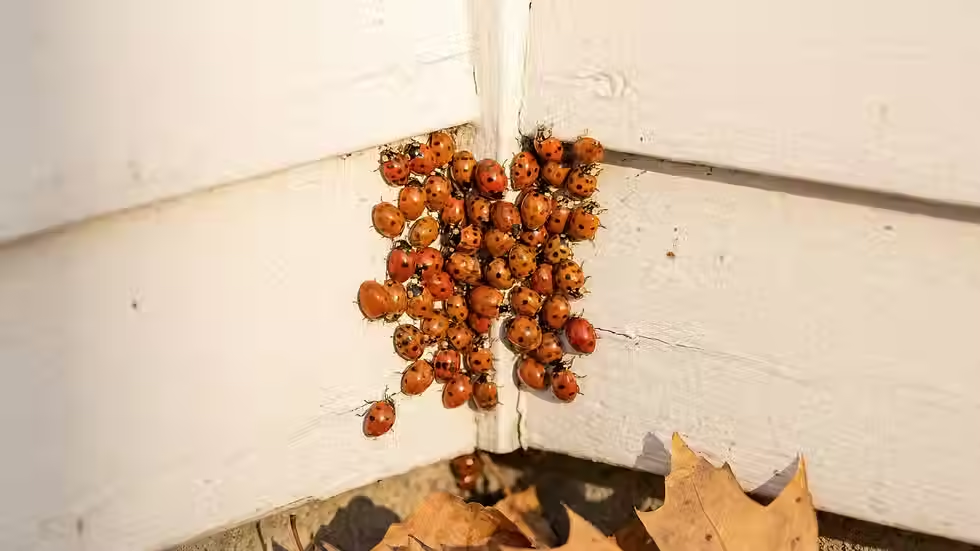
UVM Extension receives more calls about Asian lady beetles than any other fall pest—and for good reason. These beetles earned their "Halloween beetle" nickname because they typically invade Vermont homes in late October, often appearing on sunny days following the first hard frost.
Don't be fooled by their resemblance to beneficial native ladybugs. Asian lady beetles are aggressive home invaders that congregate by the tens of thousands in attics, ceilings, and wall voids. A single Vermont home can harbor an astounding population. Local news reported Waterbury-area residents describing recent infestations as "the worst I've ever seen."
You can identify them by their oval shape, yellow-to-red coloring with zero to nineteen spots, and an M-shaped marking behind their head. Unlike native ladybugs, they bite, release foul-smelling defensive chemicals, and stain fabric and walls with orange secretions when crushed or disturbed.
Brown Marmorated Stink Bugs

This shield-shaped, grayish-brown pest is an emerging concern in Vermont. Now documented in Addison, Bennington, Chittenden, Lamoille, Washington, Windham, and Windsor counties, populations remain relatively low compared to Mid-Atlantic states where they cause massive agricultural damage.
In Vermont, stink bugs are primarily home invaders seeking winter shelter. They cannot survive our winters outdoors, making indoor hibernation essential. Adults begin congregating on south and southwest-facing walls at the end of September, probing for entry points on warm fall days.
The pest gets its name from the pungent defensive odor it releases when disturbed—a smell most people describe as similar to cilantro or burnt rubber. They can also stain walls and fabrics with their secretions.
Western Conifer Seed Bugs
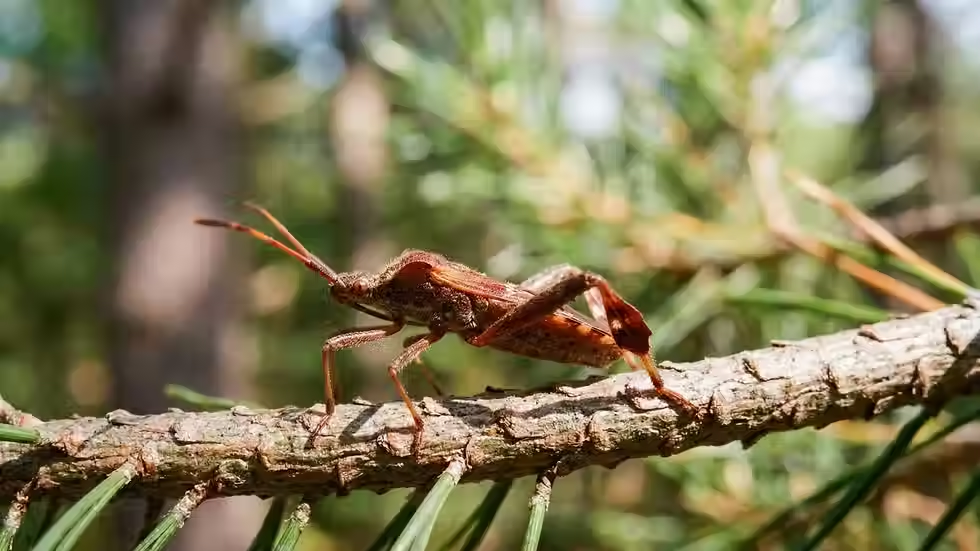
At about three-quarters of an inch long, this is the largest of Vermont's primary home invaders. These brownish bugs with distinctive widened lower hind legs thrive in Vermont's conifer forests, feeding on pine seeds throughout summer.
Originally from western states, western conifer seed bugs have expanded across northern New England over the past seven decades. They make buzzing sounds when flying and emit a pungent odor when handled—similar to but distinct from stink bugs.
Boxelder Bugs
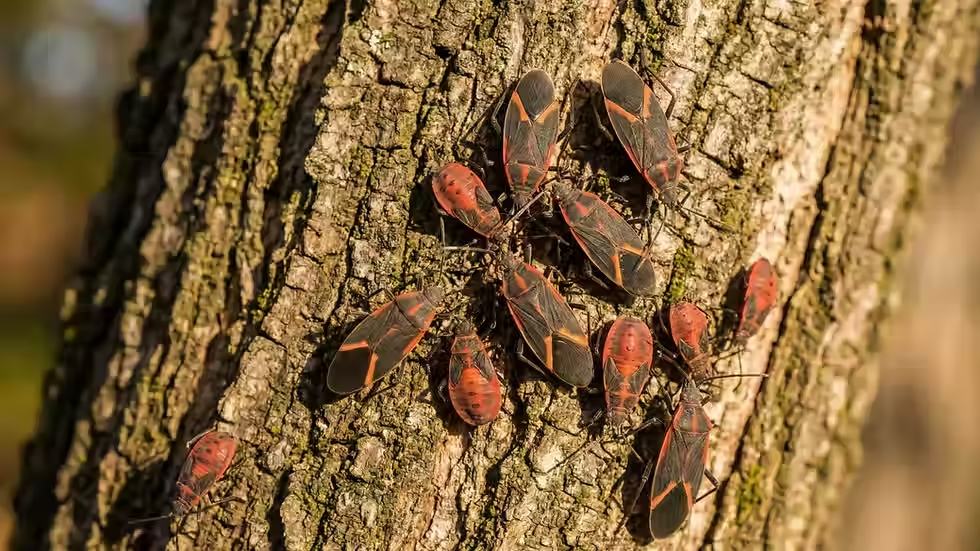
These half-inch, flat-backed insects with striking red stripes on dark bodies begin congregating in large numbers around October, primarily on southwest-facing walls. They're closely associated with boxelder, maple, and ash trees—all common throughout Vermont.
Boxelder bugs can fly up to two miles, meaning removing nearby host trees may not solve the problem. Once inside, their excrement can spot curtains, furnishings, and clothing.
Mice and Rodents
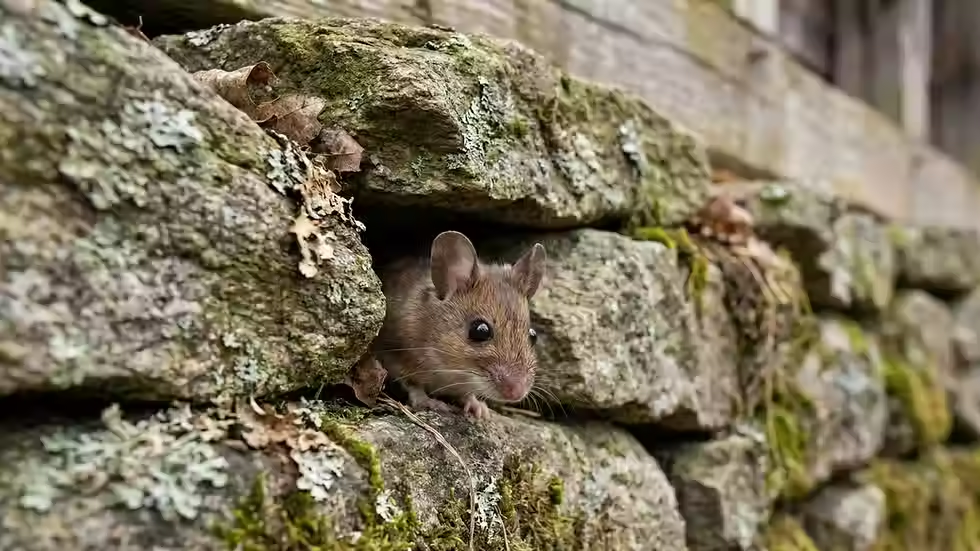
Vermont experiences a surge in rodent activity every fall as crops are harvested and temperatures drop. House mice, deer mice, and white-footed mice all seek indoor shelter, and Vermont's housing stock presents particular challenges.
Many older Vermont homes have stone or rubble foundations that allow easy rodent access. A mouse needs only a quarter-inch gap to enter—about the diameter of a pencil. Once inside, they reproduce rapidly. House mice mature in just 35 days, can have their first litter at 60 days, and a single female produces up to 40 young per year.
The health concerns are significant. Deer mice carry hantavirus. White-footed mice are primary carriers of the bacteria that causes Lyme disease. All mice spread salmonella and contaminate far more food than they consume—a single mouse produces up to 18,000 droppings annually.
Carpenter Ants
Vermont hosts two species: the Black Carpenter Ant (most common) and New York Carpenter Ant. Unlike other overwintering pests, carpenter ants pose a genuine structural threat to your home.
They thrive in cold climates by producing antifreeze-like chemicals and remain active from February through November. Main colonies can be located up to 300 feet away from satellite colonies inside homes, making them difficult to eliminate without professional help.
Carpenter ants target moist or decaying wood—common in Vermont's aging housing stock—and can also nest in foam insulation. Signs include sawdust piles, rustling sounds in walls, and hollow-sounding wood when tapped.
Spiders
Vermont has approximately 25 spider species, with most passing winter as eggs or in dormant states within cracks and crevices. Common house spiders survive Vermont winters by producing glycerol, an antifreeze compound, when temperatures drop.
While most spiders become dormant, those in heated structures can remain active year-round. The Northern Black Widow and Brown Recluse (rare in Vermont) represent the only potentially dangerous species. Most spiders you'll encounter are harmless and actually help control other pest populations.
Natural Prevention Methods That Work
At Purely Nature's Way, our approach aligns with what UVM Extension calls the most effective control method: mechanical exclusion. This means stopping pests before they enter, rather than treating them after they're established in your walls.
Seal Entry Points with Silicone Caulk
Walk your home's exterior and identify every crack, gap, and opening. Use high-quality silicone or silicone-latex caulk—it remains flexible in Vermont's temperature extremes and won't crack like standard latex products.
Focus your sealing efforts on south and southwest-facing walls, where pests congregate before entering. Pay particular attention to areas around windows and doors, where siding meets the foundation, utility penetrations for pipes, wires, and cables, around exterior light fixtures, and where different building materials meet.
Install Proper Screening
Cover attic vents, fireplace chimneys, and exhaust vents with #20 mesh or smaller—this is the specific recommendation from UVM Extension. Standard window screen is too coarse to stop smaller insects.
Repair or replace damaged door and window screens. Install door sweeps on all exterior doors, checking for any daylight visible underneath.
Apply Diatomaceous Earth in Key Areas
Food-grade diatomaceous earth is one of the most effective natural pest control substances available. This fine powder made from fossilized algae works mechanically—microscopic sharp edges damage the waxy coating on insects, causing dehydration.
Apply thin layers along foundation perimeters, in accessible wall voids, around entry points, and in attic spaces where pests congregate. Keep it dry—moisture renders it ineffective, so reapply after rain or in humid areas.
Use Essential Oil Barriers
Certain essential oils have documented repellent properties. Peppermint oil deters mice and spiders. Clove oil repels cluster flies and other flying insects. Cedar oil works against a variety of crawling pests.
These aren't standalone solutions—a few drops of peppermint oil won't eliminate a mouse infestation—but when combined with exclusion and other methods, essential oil barriers add another layer of protection at entry points.
Address Moisture Issues
Many pests, including carpenter ants and centipedes, are attracted to moisture. Fix leaky pipes and faucets. Ensure proper drainage away from your foundation. Use dehumidifiers in damp basements. Replace water-damaged wood promptly.
Vermont's humid summers and the condensation that occurs when warm air meets cold foundation walls create ideal conditions for moisture problems. Addressing these issues reduces pest pressure while protecting your home's structure.
Your September Action Checklist
Week 1 (Early September)
Conduct a thorough exterior inspection of your home. Walk the entire perimeter, examining the foundation, siding, windows, doors, and roofline. Note every crack, gap, or potential entry point. Check weatherstripping on all doors and look for daylight filtering underneath or around frames.
Week 2 (Mid-September)
Begin sealing identified entry points with silicone caulk. For gaps larger than a quarter inch, stuff with copper mesh or steel wool before caulking—mice can chew through caulk and expanding foam alone. Install or replace door sweeps. Repair damaged screens.
Week 3 (Late September)
Apply diatomaceous earth to key areas: along foundation perimeters, in accessible wall voids, around utility penetrations, and in attic spaces. Clear debris, leaves, and vegetation away from your foundation—these provide pest harborage. Move firewood storage at least 20 feet from the house.
Week 4 (Early October)
Address moisture issues in basements and crawl spaces. Clean gutters to prevent water damage. Trim tree branches and shrubs away from the structure—pests use these as bridges to access upper floors. Consider professional inspection if you've had significant pest problems in previous years.
When to Call Professional Pest Control
DIY prevention works well for many Vermont homes, but certain situations benefit from professional intervention.
Consider calling professionals if you've had significant pest problems in previous years and expect the pattern to continue, if your home is older with stone foundations or numerous potential entry points that are difficult to seal comprehensively, if you're seeing signs of active infestation—droppings, sawdust piles, or large numbers of insects on exterior walls, if you have a large property that's difficult to fully inspect and protect yourself, or if you want the peace of mind that comes from expert evaluation and treatment.
At Purely Nature's Way, our fall prevention service includes comprehensive exterior inspection to identify vulnerabilities, professional-grade exclusion work using methods that last, natural barrier treatments applied at optimal timing, targeted applications for high-pressure areas, and ongoing monitoring through the season.
We serve homeowners throughout Vermont—from Burlington and the Champlain Valley to Montpelier, the Upper Valley, and the Northeast Kingdom. Our natural-first approach means effective pest protection without exposing your family, pets, or Vermont's environment to unnecessary chemicals.
Protect Your Vermont Home This Fall
The clock is ticking on fall pest prevention. Every day you wait, more cluster flies are probing your siding, more mice are scouting your foundation, and more lady beetles are congregating on your south-facing walls.
UVM Extension puts it simply: mechanical exclusion is the best method of control. But it only works if you act before pests establish themselves in your walls. Once they're hibernating in wall voids, exterior treatments become ineffective and you're committed to dealing with them until spring.
Don't wait until you're vacuuming hundreds of cluster flies from your windows or hearing mice in your walls at night. Take action now, while prevention is still possible.
Contact Purely Nature's Way today for a free fall pest prevention inspection. We'll identify your home's vulnerabilities, recommend the right natural solutions, and help you enjoy a pest-free Vermont winter.
Frequently Asked Questions
When do pests start entering Vermont homes in fall?
Pests begin seeking indoor shelter when nighttime temperatures drop below 50°F, which typically occurs mid-September in northern Vermont and late September in southern regions. Cluster flies are the earliest invaders, often appearing in late August. By mid-October, most overwintering pests have already established themselves in wall voids.
Why does Vermont have such bad fall pest problems?
Vermont is 78% forested—4.6 million acres making it the third most forested state in the contiguous U.S. Homes are essentially islands surrounded by pest habitat. Combined with extreme winter temperatures that can reach -20°F to -35°F, indoor shelter becomes essential for pest survival, not just convenient.
What is the best way to prevent fall pests naturally?
UVM Extension recommends mechanical exclusion as the most effective method: sealing cracks with silicone caulk, repairing damaged screens, and covering vents with #20 mesh. Focus on south and southwest-facing walls where pests congregate. Exterior treatments should be applied before mid-September to be effective.
Are cluster flies common in Vermont?
Yes, cluster flies are particularly problematic in rural Vermont, especially near agricultural land with rich soil where earthworms—their larval hosts—thrive. They can travel up to 3 miles to find shelter and often invade in swarms of thousands, making them one of the most common pest complaints to UVM Extension.
How do I know if I have carpenter ants?
Signs include small piles of sawdust-like material (called frass) near wooden structures, rustling or crinkling sounds inside walls, hollow-sounding wood when tapped, and seeing large black ants (¼ to ½ inch) inside your home, especially in spring. Unlike other overwintering pests, carpenter ants cause structural damage and require professional treatment.


Comments